和AI协作两年多,我一直说不清楚,为什么有的prompt读起来就觉得好妙,用起来更是"一击即中"?今天我想尝试用一个简单的例子把这种很玄的感觉说清楚,我发现:
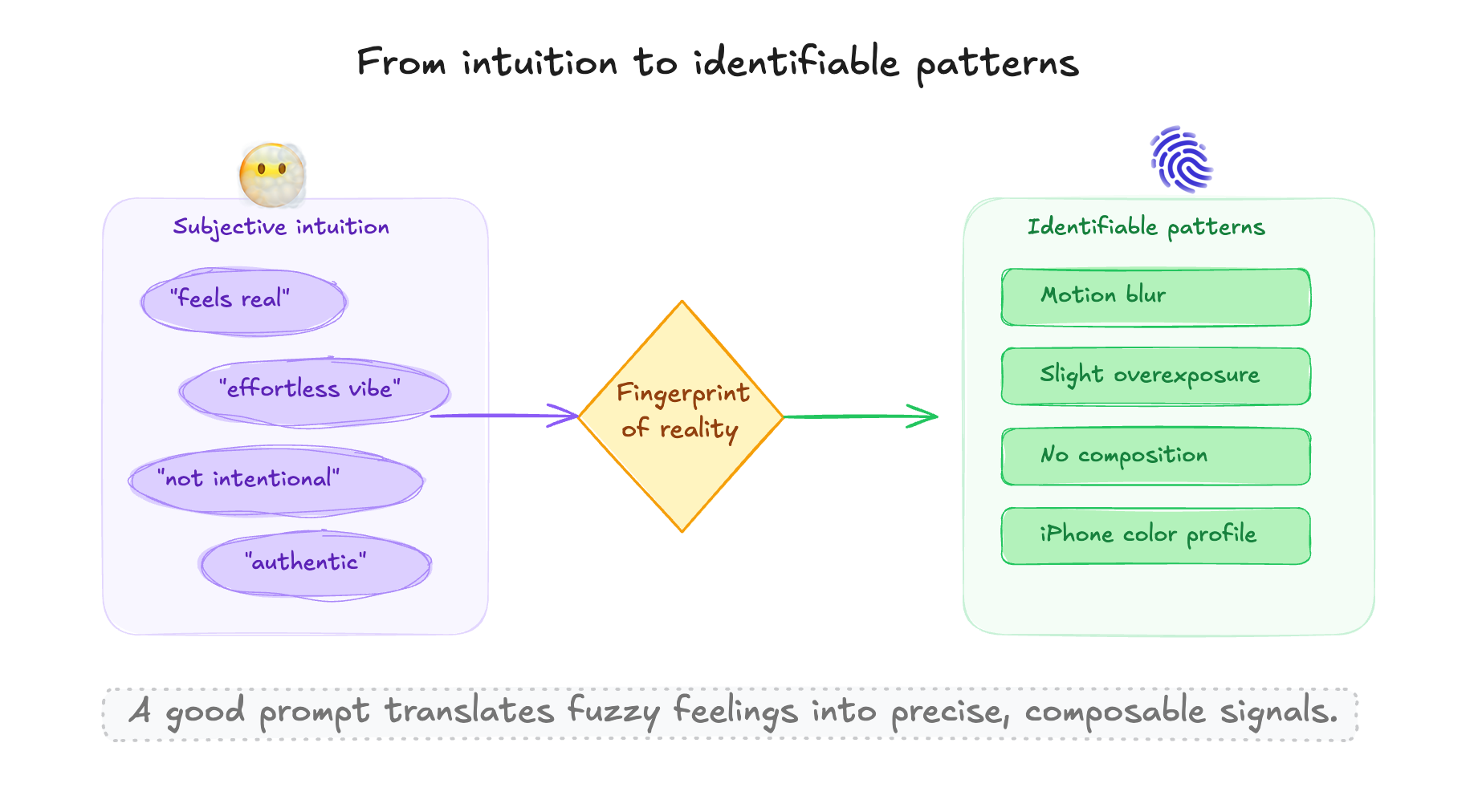
好的prompt,本质上是一套精准的特征组合——它把人类习惯表达的主观感受,翻译成LLM可以识别的具体模式。这其中蕴含着AI产品的价值密码。
这个例子我不知道读了多少遍,是在ChatGPT 4o生图功能推出时,推特上疯转的一个prompt:
"...一张极其平凡无奇的iPhone照片,没有明确的主体或构图感...照片略带运动模糊...整体呈现出一种刻意的平庸感,就像是从口袋里拿手机时不小心拍到的一张照片。"
这个prompt妙在哪里?
- 逆向工程 它不说"生成一张真实感十足的照片",而是反向定义,瞄准一种真实照片中常见的缺陷(在人类的潜意识里,有缺陷又恰恰意味着真实)
- 特征模型 "iPhone照片"、"运动模糊"、"轻微过曝"——每个细节都是从现实中提炼的关键特征,组合在一起是一个信号强烈的模式
- 因果结构 它不限定场景,不规定构图,用了"掏手机时不小心拍到"这个因果框架,把这个情景下所有可能的视觉结果用一个"过程"框住!
这个prompt还原了一张平庸到极度真实的生活快照。它把人类对"真实"的主观判断,翻译成了一组可识别的"缺陷"的具体特征。
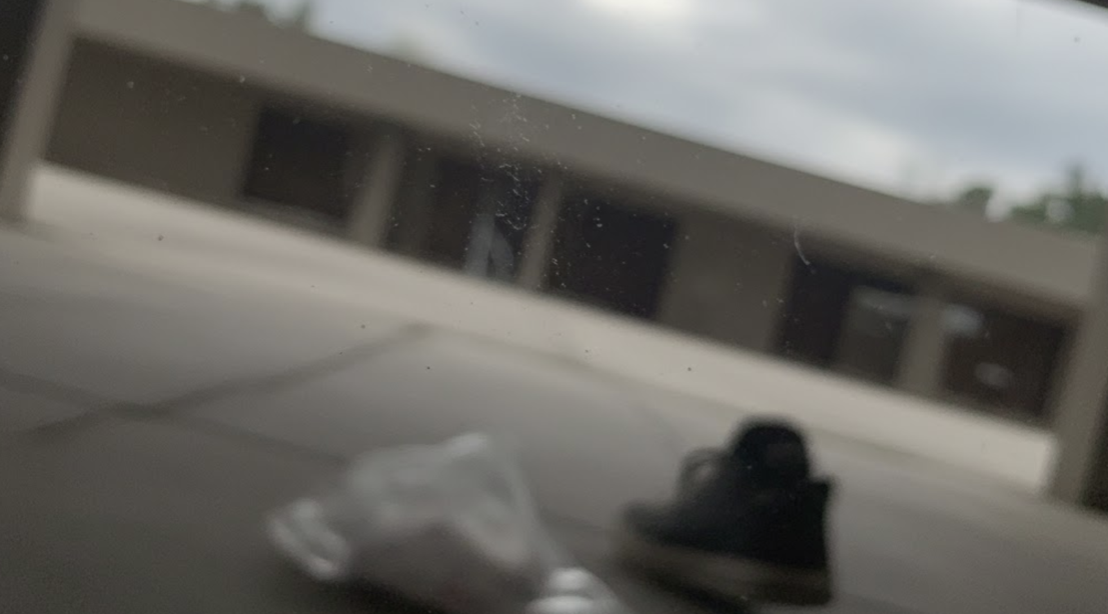
它证明了"真实感"并非玄学,当我用ChatGPT生成的"平庸照片"完美符合我心里那个模糊的现实印象时,还蛮震撼的:
如何找到类似的"现实的指纹"?
现在,这个prompt几乎成为了文生图领域"以假乱真"的照片的原语,大家改造它,生成各种有真实感的自拍和手机照片。
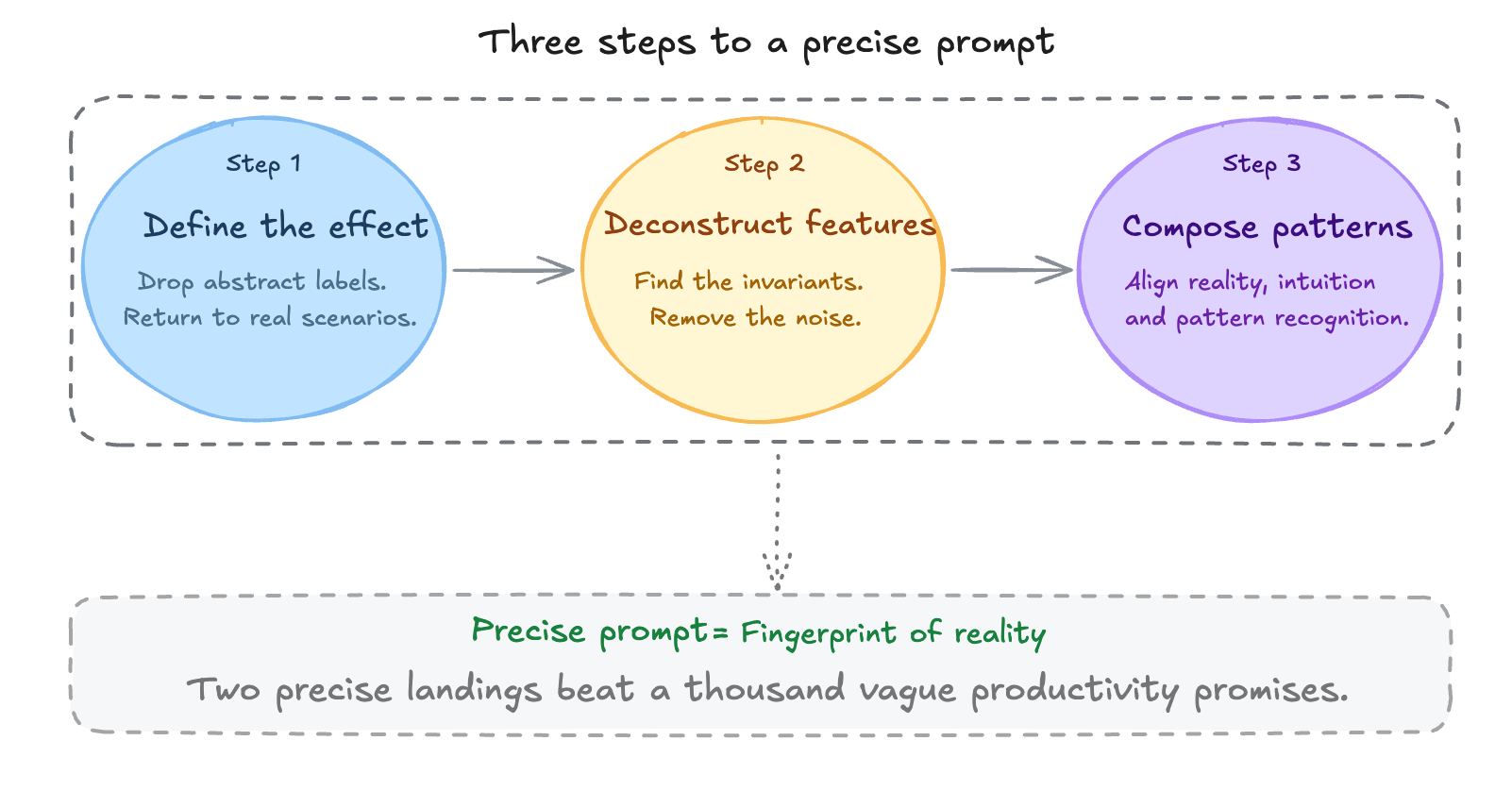
我觉得这个prompt真正的价值,是因为它捕捉到了我称之为"现实的指纹"的东西——那些让人一眼就觉得"真"的特征组合。它是一种对现实的观察,把无意识的、失控的、缺陷的质感,变成一个清晰的prompt。这既要符合某个普遍的人类直觉,也要符合AI能够定位并产出的稳定的模式。它遵循这样一套prompt思维方法:
第一步:定义效果 — 抛弃定义词,回归现实场景
我(或用户)需要的是什么感觉?这个感觉(比如"高级"、"专业"、"品味")在现实经验里,通常在什么场景下出现?由哪些具体特征构成?
第二步:解构特征 — 寻找"不变量",剔除"噪声"
在这些场景和特征中,有哪些稳定存在的不变量?哪些是干扰项?什么是AI在框架下可以自由操作的变量?
第三步:组合模式 — 现实经验、人类直觉、模式识别的对齐
将提炼出的核心特征用合适的语言结构编织在一起,读一读它是否合理?有没有指向一个明确的模式?有没有AI发挥的空间?
AI产品 = 主观感觉被AI接住?
这种转换思维可以应用到更多场景。人们与chatbot的聊天里已经有各种需求:
"AI味儿不那么浓的AI"、"按照我的阅读品味给这篇文章划线"、"设计一个极简的封面"
所有这些主观的感受,都指向开放、模糊的语义空间,这些模糊的,在用户心里的定义,也都等待着被转换成有界、清晰的效果结构。
我觉得这是一种相当考验认知和洞察力的"逆向工程",如何选择特征,特征的组合是否有意义,AI输出的结果是否能给人带来稳定的感受,几乎都依赖明确的、富有创新的洞察。它最终带来的效果,是让具体的主观感觉被AI接住。
AI应用的挑战
这部分算是我的暴论吧,在我的价值序列里,一次清晰地让感觉落地,好过一千个模糊的生产力承诺。AI应用的困境在于要生产一种感觉,这种感觉要人们真的需要,恰好AI也能干,擅长干。摸到"现实的指纹",就是以某种符合现实的方式理解人,理解AI,把人的需求转化成AI的能力。清晰的落地感,是一个值得追求的目标。
开始做内容,也是想把思考变成观点,尝试一点点把混沌变清晰。但实际做起来才知道,本来以为很明白的东西,讲清楚还是很难。有哪些我没说明白或者你觉得不对的地方,欢迎和我讨论——要是这次没说清楚,还有下次嘛!
After collaborating with AI for over two years, I've never been able to articulate why some prompts just feel brilliant to read — and even more so when you use them, they hit the mark instantly. Today I want to try explaining that elusive feeling with a simple example. Here's what I've found:
A good prompt is essentially a precise combination of features — it translates the subjective feelings humans habitually express into concrete patterns that LLMs can recognize. This holds the value code of AI products.
I've read this example countless times. When ChatGPT 4o's image generation launched, this prompt went viral on Twitter:
"...an extremely mundane iPhone photo with no clear subject or sense of composition...the photo has slight motion blur...the overall feel is one of deliberate mediocrity, as if someone accidentally took a photo while pulling their phone out of their pocket."
What makes this prompt brilliant?
- Reverse Engineering Instead of saying "generate a realistic photo," it uses reverse definition, targeting the kind of flaws common in real photos (in our subconscious, flaws actually signal authenticity)
- Feature Model "iPhone photo," "motion blur," "slight overexposure" — each detail is a key feature extracted from reality, and combined they form a strongly signaled pattern
- Causal Structure It doesn't constrain the scene or dictate composition — it uses a causal framework of "accidentally taking a photo while pulling out your phone," containing all possible visual outcomes within a single "process"!
This prompt reconstructed a snapshot so mundane it feels extremely real. It translated the human subjective judgment of "realness" into a set of identifiable, concrete features of "flaws."
It proved that "authenticity" isn't mystical. When ChatGPT's generated "mundane photo" perfectly matched that fuzzy impression of reality in my mind, it was quite stunning:
How to find similar "fingerprints of reality"?
Now this prompt has become the proto-language for photorealistic image generation — people remix it to create all kinds of authentic-feeling selfies and phone photos.
I believe this prompt's real value comes from capturing what I call "fingerprints of reality" — the feature combinations that make something instantly feel "real." It's a kind of observation of reality, turning unconscious, uncontrolled, flawed textures into a clear prompt. It must align with a universal human intuition while also matching a stable pattern that AI can locate and produce. It follows this prompt thinking method:
Step 1: Define the effect — abandon abstract labels, return to real scenarios
What feeling do I (or the user) need? Where does this feeling (e.g., "premium," "professional," "tasteful") typically appear in real experience? What specific features constitute it?
Step 2: Deconstruct features — find "invariants," remove "noise"
Among these scenarios and features, which are stable invariants? Which are distractors? What variables can AI freely operate within the framework?
Step 3: Combine patterns — align real experience, human intuition, and pattern recognition
Weave the extracted core features together with appropriate language structure. Does it read as reasonable? Does it point to a clear pattern? Does it leave room for AI to express?
AI products = subjective feelings caught by AI?
This translation mindset applies to many more scenarios. People's chats with chatbots already contain all kinds of demands:
"An AI that doesn't feel so AI-ish," "highlight this article according to my reading taste," "design a minimalist cover"
All these subjective feelings point to open, ambiguous semantic spaces. These fuzzy definitions living in users' minds are all waiting to be translated into bounded, clear effect structures.
I think this is a form of "reverse engineering" that demands real cognition and insight — how you choose features, whether the combination is meaningful, whether AI's output can deliver a stable feeling — all depend on clear, innovative insight. The ultimate result is letting specific subjective feelings be caught by AI.
The challenge of AI applications
This might be my hot take, but in my value hierarchy: one clear moment of making a feeling land is worth more than a thousand vague productivity promises. The dilemma of AI applications is producing a feeling that people genuinely need, and that AI happens to be able to deliver — and deliver well. Touching the "fingerprint of reality" means understanding people and AI in a way that matches reality, translating human needs into AI capabilities. A clear sense of landing is a goal worth pursuing.
I started creating content because I wanted to turn thinking into viewpoints, trying to make chaos a little clearer. But once I actually started, I realized that things I thought I understood are still hard to explain well. If anything's unclear or you disagree, I'd love to discuss — if I didn't nail it this time, there's always next time!
mmguo (Lingbo Guo) is a Tsinghua University graduate, now building AI products. She writes interaction experiments, meta prompts, and observations on the AI industry at mmguo.dev. Follow her on X @mmguo_lb · Xiaohongshu 秒秒Guo